Forced Proximity Trope: What It Means, the Types, and Books That Nail It
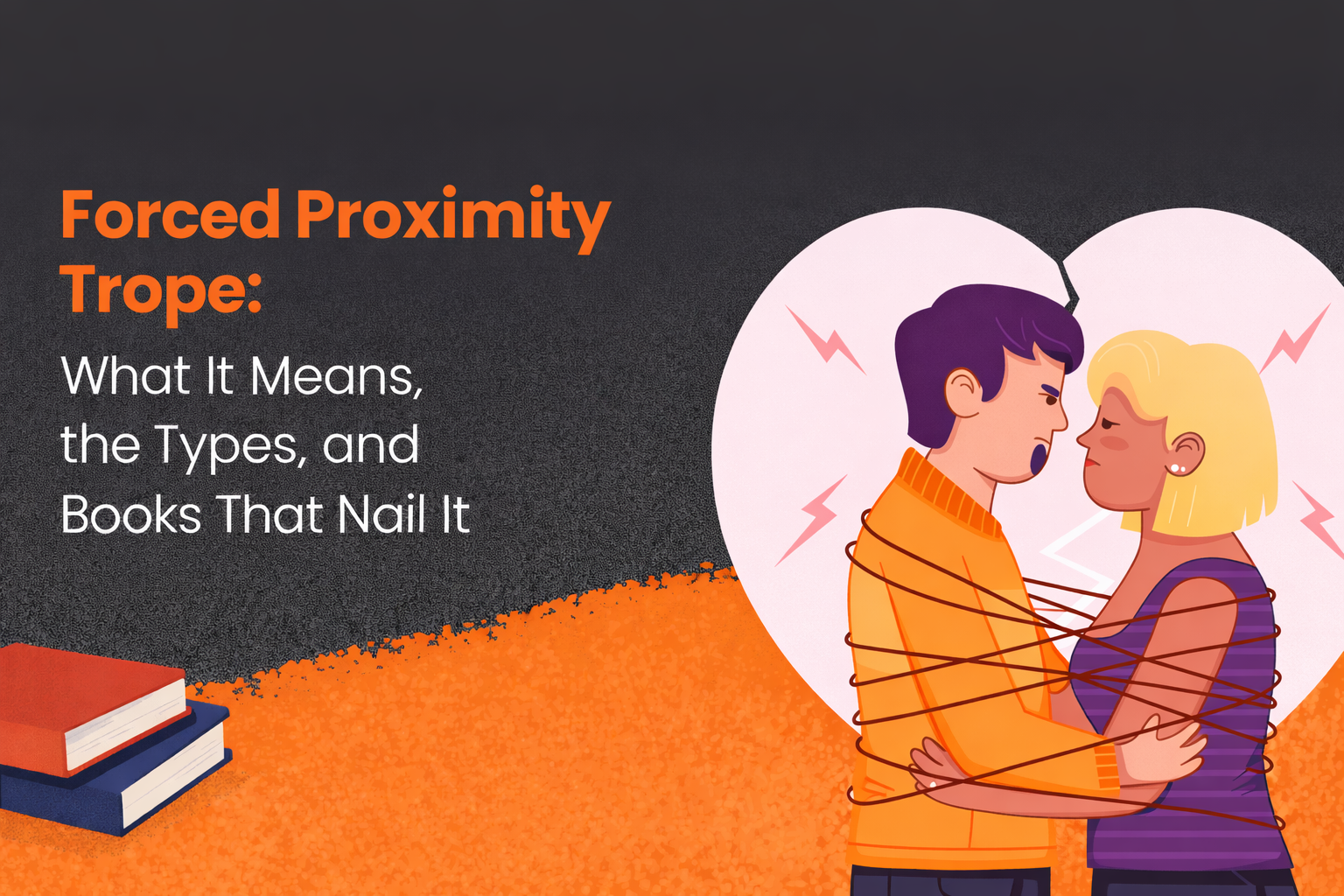
A snowstorm shuts down every road out of town. The hotel has one room left. The cabin in the mountains loses power. The airline overbooks and two strangers get reassigned to the same tiny seat row for a twelve-hour flight.
Now put two people who have unresolved tension in that space. Close the door. Remove every possible exit.
That's forced proximity. And romance readers have been obsessed with it for as long as romance has existed.
There's a reason this trope keeps showing up in bestseller lists, BookTok recommendations, and reader "favorites" lists. It does something no other trope can do quite as effectively — it strips away every excuse two characters have for not dealing with what's between them.
When you can't leave, you have to face it. Whatever "it" is.
What Is the Forced Proximity Trope? — Forced Proximity Meaning
Forced proximity is exactly what it sounds like — two characters are placed in a situation where they have to spend time together in close quarters, whether they want to or not. The "forced" part is key. Neither character chose this. Circumstances decided for them.
The trope works as both a standalone plot device and as a supporting element inside other tropes. You'll often see it layered with enemies to lovers (stuck with someone you hate), fake dating (pretending to be together while sharing space), or even marriage of convenience (legally bound and now physically bound too).
The magic isn't in the setting. It's in what happens when two people can't escape each other's presence — and can't escape whatever they're feeling.
Why Forced Proximity Works Every Single Time
There's No Escape Valve
In regular life, when tension gets uncomfortable, people leave. They go home. They avoid the person. They put distance between themselves and the feeling. Forced proximity removes that option entirely. The tension has nowhere to go except up.
That's why it pairs so well with slow burn romance. The slow build becomes unavoidable when two people are sharing the same four walls. Every morning, they wake up knowing the other person is right there. Every night, the proximity gets heavier. Our post on how to write a slow burn romance talks about this kind of tension building.
Small Moments Become Loaded
When two characters live in the same space, mundane interactions become charged. Making coffee in the same kitchen. Reaching for the same door handle. Hearing someone laugh through a thin wall. In normal circumstances, these are nothing. In forced proximity, they're everything.
The best forced proximity books understand this. They don't rely on big dramatic moments to build chemistry. They use the accumulated weight of a hundred small ones.
Vulnerability Is Unavoidable
You can't maintain your walls 24/7. Eventually, one character sees the other without their armor — crying over a phone call, having a nightmare, singing badly in the shower, being genuinely kind to a stranger. These unguarded moments are where attraction stops being physical and becomes personal.
Forced proximity forces vulnerability. And vulnerability is where real connection starts.
The Clock Is Always Ticking
Most forced proximity situations are temporary. The storm will end. The project will finish. The lease will expire. That ticking clock adds urgency to everything. The characters know this isn't permanent — which makes every moment inside the proximity feel more precious and more desperate.
Types of Forced Proximity — Pick Your Flavor
Snowed In / Stranded
The classic. A blizzard, a broken-down car, a cancelled flight. Two people stuck somewhere remote with no way out until the weather clears. Cozy, intimate, and perfect for slow burn.
Books: The Flatshare by Beth O'Leary, One Day in December by Josie Silver
Only One Bed Trope
The micro-trope that lives inside forced proximity. The hotel has one room. The room has one bed. Neither character will take the floor. The result is six inches of mattress and zero inches of emotional distance. The only one bed trope is a fan favorite for a reason — the setup is simple and the tension is immediate.
Books: The Unhoneymooners by Christina Lauren, Get a Life Chloe Brown by Talia Hibbert
Roommates / Shared Living Space
Not stranded — just stuck. Two characters sharing an apartment, a house, or a dorm because neither has another option. The tension builds through daily routine — bathroom schedules, grocery shopping arguments, accidentally walking in on each other.
Books: The Flatshare by Beth O'Leary, The Hating Game by Sally Thorne (office version)
Work Assignment / Road Trip
Forced together by professional obligation or a shared journey. The confined space of a car, a film set, a research station, or a cross-country trip creates the same pressure cooker effect. They didn't choose each other. The job did.
Books: Beach Read by Emily Henry, People We Meet on Vacation by Emily Henry, The Spanish Love Deception by Elena Armas
Captive Proximity (Dark Version)
One character can't leave because the other won't let them. Kidnapping, imprisonment, or supernatural binding. This is where forced proximity crosses into dark romance territory. The power imbalance adds a layer of tension that lighter versions don't carry.
Books: Captive in the Dark by CJ Roberts, A Court of Thorns and Roses by Sarah J. Maas
Island / Retreat / Cabin
Removed from civilization entirely. A private island, a remote retreat, a cabin with no phone signal. The isolation amplifies everything — there are no distractions, no friends to call, no bars to disappear into. Just two people and whatever is growing between them.
Books: The Simple Wild by K.A. Tucker, Act Your Age Eve Brown by Talia Hibbert
Forced Proximity + Other Tropes — The Best Combinations
Forced proximity rarely works alone. Its real power comes from what it's paired with:
Forced Proximity + Enemies to Lovers: The tension is already there. Now they can't walk away from it. This combination is responsible for some of the most popular romance novels ever written. Read our deep dive into the enemies to lovers trope.
Forced Proximity + Fake Dating: Pretending to be together while actually living together? The line between performance and reality dissolves faster than either character expects. Our piece on the fake dating trope covers how this works.
Forced Proximity + Grumpy Sunshine: One character is annoyed by the proximity. The other treats it like an adventure. The grumpy sunshine dynamic gets amplified when neither person can retreat to their corner.
Forced Proximity + Second Chance: Ex-lovers forced back into the same space. The history makes every interaction loaded with past pain and unfinished feelings. Second chance romance plus proximity is an emotional pressure cooker.
Forced Proximity + Only One Bed: The double layer. Already stuck together — now sharing a bed. The physical closeness mirrors the emotional closeness neither character is ready for.
Best Forced Proximity Books That Nail the Trope
The Flatshare by Beth O'Leary — Two strangers share a one-bed apartment in alternating shifts. They communicate through Post-it notes before they ever meet face to face. Sweet, funny, and brilliantly structured.
People We Meet on Vacation by Emily Henry — Best friends take a vacation together every year. This year, with unresolved feelings and a shared hotel room, everything changes.
The Spanish Love Deception by Elena Armas — A fake boyfriend on a transatlantic trip to a family wedding. The plane ride alone has more tension than most entire novels.
The Unhoneymooners by Christina Lauren — Sworn enemies forced to go on a honeymoon together (it makes sense in context). Only one hotel suite. Forced proximity with a tropical backdrop.
Red, White & Royal Blue by Casey McQuiston — A prince and the First Son of the United States locked in a supply closet. One scene of forced proximity changes the entire trajectory of their relationship.
A Court of Thorns and Roses by Sarah J. Maas — Taken to a fae realm against her will. The entire first book is forced proximity between Feyre and a world she doesn't understand — including a High Lord she doesn't trust.
Beach Read by Emily Henry — Two writers with opposite styles end up as neighbors for the summer. The proximity is voluntary in theory, involuntary in practice.
The Simple Wild by K.A. Tucker — A city girl stranded in the Alaskan wilderness with a grumpy bush pilot. No phone signal. No escape. No chance of not falling for him.
Act Your Age Eve Brown by Talia Hibbert — Eve accidentally hits the B&B owner with her car, then ends up working for him. Living and working in the same tiny bed and breakfast. Hilarious and steamy.
From Lukov with Love by Mariana Zapata — Figure skating partners who can't stand each other, forced to train together daily. The slow burn is legendary. The proximity makes every practice session a minefield.
Want to know the spice level of these books before reading? Or whether they're open door or closed door? We've got guides for that.
What Makes Forced Proximity Fail?
Not every forced proximity book works. Here's what goes wrong:
The proximity isn't actually forced. If either character could easily leave but just... doesn't, the tension deflates. The "forced" part needs to be real. External circumstances must make leaving genuinely impossible or impractical.
The tension resolves too early. If characters get together in chapter 5 of a 30-chapter book, the rest of the story has no engine. Forced proximity works because it sustains tension. Resolve it too fast and there's nothing left to drive the plot.
No vulnerability. If both characters maintain their walls perfectly despite being in close quarters, the reader never gets the intimate moments that make this trope special. Someone has to crack first.
The setting doesn't matter. A good forced proximity book makes the space feel claustrophobic, cozy, or charged. If the cabin, apartment, or office could be replaced by any other location without changing the story, the proximity isn't doing its job.
Create Your Own Forced Proximity Story
Want to build your own forced proximity scenario? Pick two characters who shouldn't be in the same room together, then remove every exit.
Use SmutFinder — an ai smut writer that lets you choose tropes, set the scene, and build tension between characters exactly the way you want. Snowed-in cabin? One bed? Shared apartment? You decide the proximity. The AI handles the rest.
Looking for inspiration?
Try our fantasy AI prompts for writers.
Curious about exploring taboo scenarios?
We cover those too.
And if you're new to the world of spicy fiction, start with what smut means in books.
Forced proximity works because it mirrors something real — the way closeness, even unwanted closeness, can change how you see someone. The way of sharing space strips away pretense. The way two people who never would have chosen each other sometimes turn out to be exactly what the other needed.
The trope has been around for centuries and it's not going anywhere. Readers will always love the story of two people with nowhere to run — except toward each other.
Want more tropes? Explore our series covering dark romance, grumpy sunshine, enemies to lovers, and beyond.
Frequently Asked Questions
What does forced proximity mean in romance?
Forced proximity is a romance trope where two characters are placed in a situation that requires them to spend extended time together in close quarters — whether by circumstance, obligation, or accident. The "forced" element is key: neither character chose the arrangement. Common setups include being snowed in, sharing an apartment, road trips, work assignments, and the classic "only one bed" scenario.
What is the only one bed trope?
Only one bed is a micro-trope within forced proximity where two characters — usually with unresolved tension — are forced to share a single bed. The physical closeness eliminates personal space and accelerates emotional intimacy. It's one of the most popular setups in romance fiction because the tension is immediate and the payoff is built into the premise.
What's the difference between forced proximity and enemies to lovers?
Forced proximity is a situation — being stuck together. Enemies to lovers is a relationship dynamic — starting with hostility that becomes love. The two tropes combine powerfully: enemies who can't escape each other's presence are forced to confront what's really between them. But forced proximity also works with friends, strangers, exes, and reluctant allies.
Why is forced proximity so popular in romance?
Forced proximity removes the ability to avoid tension. Characters can't walk away, ghost each other, or create distance. Every interaction becomes loaded because there's no escape valve. The trope also naturally creates vulnerability — living in close quarters means someone eventually sees behind the other's walls — and that's where real connection starts.
What are the best forced proximity romance books?
Top forced proximity books include The Flatshare by Beth O'Leary (shared apartment), People We Meet on Vacation by Emily Henry (vacation), The Spanish Love Deception by Elena Armas (travel), The Unhoneymooners by Christina Lauren (honeymoon), and From Lukov with Love by Mariana Zapata (training partners). Each uses proximity differently, but all build tension through unavoidable closeness.
Ready to start your writing journey?
Join thousands of writers who are already creating amazing stories with our AI-powered platform.